






Jeffrey Peng MD
Mar 5
6 min read
By Dr. Jeffrey Peng, MD · Published March 5, 2025 · 7 min read
Watch the Full Video
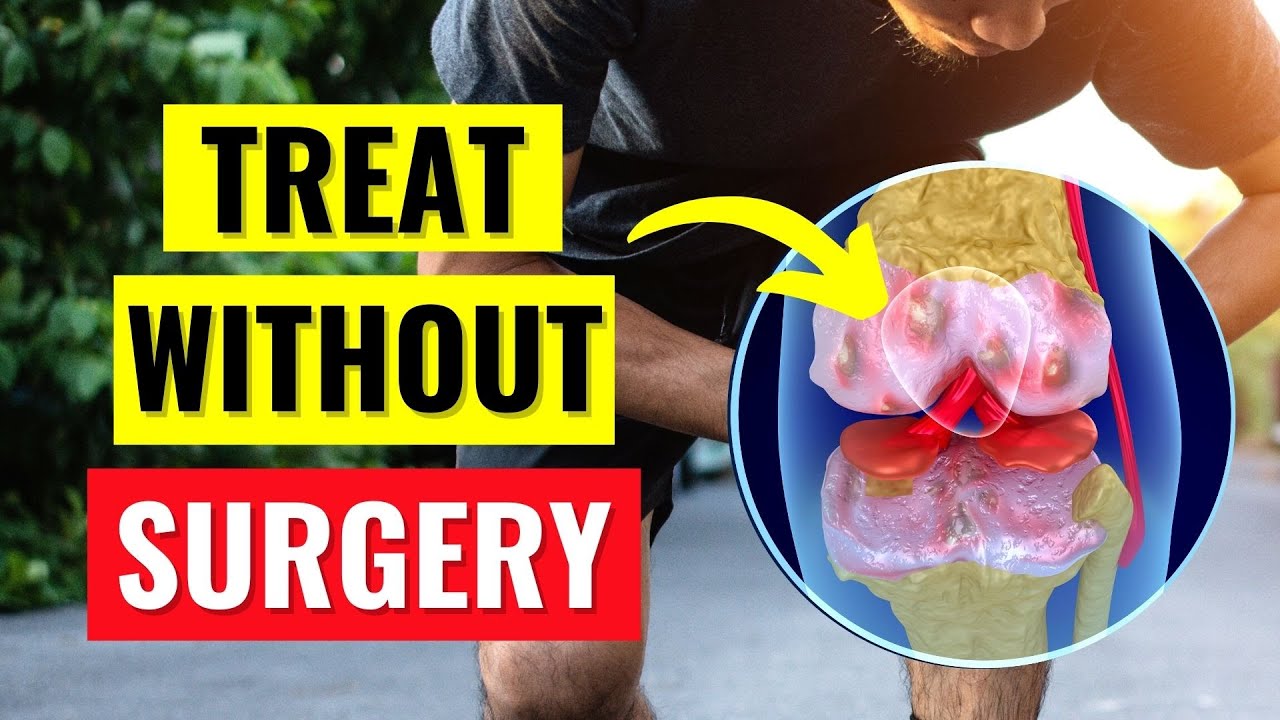
Meniscus tears are one of the most common knee injuries, and for patients with degenerative tears, the standard recommendation from many orthopedic surgeons remains arthroscopic partial meniscectomy. However, a growing body of evidence suggests that surgery should be seen as a last resort for degenerative meniscus tears, not a first-line treatment. In fact, a comprehensive non-surgical treatment protocol that includes pain management, exercise therapy, and maintenance injections can produce outcomes that are equal to or even better than surgery, while also protecting against further arthritis progression.
In this post, I review the latest research comparing meniscus surgery to non-surgical management, explain why I recommend an extensive trial of conservative treatment for all patients with degenerative meniscus tears, and share the step-by-step protocol I use in my sports medicine practice.
What Is the Difference Between Acute and Degenerative Meniscus Tears?
It is important to understand that there are two broad categories of meniscus tears. Acute meniscus tears typically occur in younger athletes as a result of trauma or a sporting injury. These knees are otherwise healthy and show no signs of osteoarthritis. For acute tears in young, healthy knees, surgical repair is often the best option to preserve meniscal tissue and protect long-term joint health.
Degenerative meniscus tears are completely different. These occur because of gradual wear and tear within the knee and are usually found alongside osteoarthritis. Even traumatic tears in a knee that already has arthritis should be considered degenerative in nature. The key distinction matters because the treatment approach is fundamentally different.
Why Does Meniscus Surgery Fail for Degenerative Tears?
There are two surgical options for meniscus tears: repair and debridement (partial meniscectomy). Repair is not recommended for degenerative tears because the failure and retear rates are extremely high. An arthritic knee creates constant wear and pressure on the repair site, much like sandpaper grinding against the sutures. This leads to retear rates that can leave patients worse off than before surgery.
What about simply cleaning up the torn meniscus? Arthroscopic partial meniscectomy, which involves trimming away the damaged meniscal tissue, remains one of the most commonly performed orthopedic procedures worldwide. However, multiple studies comparing partial meniscectomy to non-surgical management have consistently shown equivalent outcomes. The surgery does not produce meaningfully better results than conservative treatment.
More concerning is that some studies have found that patients who undergo meniscectomy actually develop worse arthritis over time. This makes physiologic sense: the meniscus is a cushion and shock absorber. Even a torn and frayed meniscus still absorbs load and distributes forces across the joint. Removing that tissue accelerates cartilage wear and osteoarthritis progression.
Does Meniscus Surgery Work Better Than Non-Surgical Treatment?
One of the major critiques of earlier studies was that their sample sizes were too small to capture every patient subgroup that might benefit from surgery. A systematic review and meta-analysis published in Osteoarthritis and Cartilage sought to address this limitation. The authors pooled individual participant data from four randomized controlled trials involving 605 patients with MRI-confirmed degenerative meniscus tears and compared the effectiveness of arthroscopic partial meniscectomy to non-surgical or sham treatment (Wijn et al., 2023).
The results were clear: overall knee function and health-related quality of life did not differ between the surgical and non-surgical groups at two years of follow-up. The authors then performed extensive subgroup analyses across age, gender, body mass index, meniscus tear location, presence or absence of osteoarthritis, activity level, mechanical symptoms, walking ability, pain scores, function scores, quality of life scores, and mental health scores. No relevant subgroup of patients was identified that benefited from surgery.
The authors concluded that they recommend a restrained policy regarding meniscectomy in patients with degenerative meniscus tears. In my practice, I go one step further: I recommend that virtually all patients with degenerative meniscus tears undergo an extensive trial of non-surgical treatment before ever considering surgery. The only potential exception is a patient with a completely locked knee that cannot be unlocked with conservative measures.
A Non-Surgical Treatment Protocol for Degenerative Meniscus Tears
Here is the treatment protocol I use for patients with degenerative meniscus tears and knee osteoarthritis. It is divided into three phases, each with a specific goal.
Phase 1: Control Pain and Inflammation (Short Term)
The immediate priority is to reduce pain and inflammation enough that the patient can begin exercise therapy. Options include NSAIDs such as ibuprofen or naproxen as a short-term bridge, targeted injection therapy to calm the inflammatory response within the joint, and anti-inflammatory supplements. For many patients, I discuss platelet-rich plasma (PRP) injections as a first-line injection option because of the dual benefit of symptom relief and potential disease modification.
A randomized controlled trial published in Knee Surgery, Sports Traumatology, Arthroscopy found that PRP injections significantly decreased pain and improved functional outcomes compared to sham saline injections in patients with knee osteoarthritis. Other research has suggested that PRP may help slow the progression of arthritis by up to 50% when compared to placebo (Chu et al., 2022).
Phase 2: Start Exercise Therapy (Short to Mid Term)
Once pain is reasonably well controlled, the next step is to begin a structured exercise program. This phase has two components: cardiovascular fitness and muscle strengthening.
Research using data from the Osteoarthritis Initiative has demonstrated that quadriceps strength is inversely associated with knee joint structural damage. Stronger quadriceps muscles are associated with less cartilage damage, fewer bone marrow lesions, and reduced effusion and synovitis, meaning less overall wear and tear as well as less inflammation within the joint (Gong et al., 2022). Exercise therapy has also been shown to have pain-relieving effects comparable to common over-the-counter anti-inflammatory medications.
The focus should be on strengthening all lower extremity muscles, with particular attention to the quadriceps. Low-impact cardiovascular exercise such as stationary cycling or walking should be introduced and gradually increased to approximately 30 minutes per day. Physical therapy referral is recommended to ensure proper form and progressive loading.
Phase 3: Maintenance Therapy (Long Term)
The long-term phase focuses on sustaining the gains from earlier treatment. This includes continued exercise therapy, weight and load management to reduce mechanical stress on the knee, and periodic booster injections with PRP or hyaluronic acid as needed for symptom flares.
Real Patient Example: Applying This Protocol
A 50-year-old man presented to my clinic after several months of worsening knee pain. He had previously been very active in sports but had become more sedentary due to work and family commitments. When he tried to resume physical activity, his knee pain progressively worsened. An orthopedic surgeon obtained X-rays and an MRI showing grade 2 osteoarthritis and a complex degenerative medial meniscus tear.
He was recommended to proceed directly with arthroscopic partial meniscectomy. He was not offered physical therapy or injection therapy. He was told the meniscus tear was causing his pain and the only solution was to surgically remove it. Seeking a second opinion, he came to my clinic.
I hear stories like this frequently, and it highlights a significant gap in how degenerative meniscus tears are managed. Here is how I applied the protocol:
Because his pain was too severe to begin physical therapy immediately, we discussed short-term bridging options. He preferred to avoid oral NSAIDs due to prior stomach sensitivity, so we proceeded with a PRP injection to target both pain relief and joint protection. Three weeks after the injection, he reported significant improvement. At that point, I started him on a home exercise program and referred him to physical therapy for progressive quadriceps strengthening and lower extremity rehabilitation. I also instructed him to begin daily low-impact cardiovascular exercise, starting with stationary cycling and walking.
This is just one example of how a structured, non-surgical approach can effectively manage degenerative meniscus tears. Every patient is different, and the treatment plan should be individualized in consultation with your healthcare provider. The key takeaway is that surgery should be a last resort, not a first-line recommendation.
References
1. Wijn SRW, Hannink G, Østerås H, et al. Arthroscopic partial meniscectomy vs non-surgical or sham treatment in patients with MRI-confirmed degenerative meniscus tears: a systematic review and meta-analysis with individual participant data from 605 randomised patients. Osteoarthritis Cartilage. 2023;31(5):557-566. doi:10.1016/j.joca.2023.01.002
2. Gong Z, Li J, He Z, et al. Quadriceps strength is negatively associated with knee joint structural abnormalities — data from osteoarthritis initiative. BMC Musculoskelet Disord. 2022;23(1):784. doi:10.1186/s12891-022-05635-9
3. Chu J, Tong P, et al. Intra-articular injections of platelet-rich plasma decrease pain and improve functional outcomes compared to sham saline in patients with knee osteoarthritis. Knee Surg Sports Traumatol Arthrosc. 2022;30(12):4063-4071. doi:10.1007/s00167-022-06887-7
Medical Disclaimer: This content is for educational purposes only and does not substitute for the medical advice of a physician. Always consult your healthcare provider before beginning any new treatment program. The information presented reflects the opinion of Dr. Jeffrey Peng and does not represent the views of his employers or affiliated hospital systems.